Executive Summary: The disappearance and tragic death of 20-year-old American student James “Weston” Higginbotham during a tropical storm in the mountains of Kyoto, Japan, initially exploded across global media as a modern, impulsive clash over AI technology. However, shocking new developments recently disclosed by law enforcement and close sources—including a physical, handwritten farewell letter and deeply sorrowful, coded texts sent to a close friend—have completely shattered the initial timeline of the case. As it turns out, this tragedy was not a momentary burst of anger, but rather the heartbreaking conclusion of a silent, prolonged psychological crisis.
Part I: A Chilling Turning Point Amid a Tropical Storm
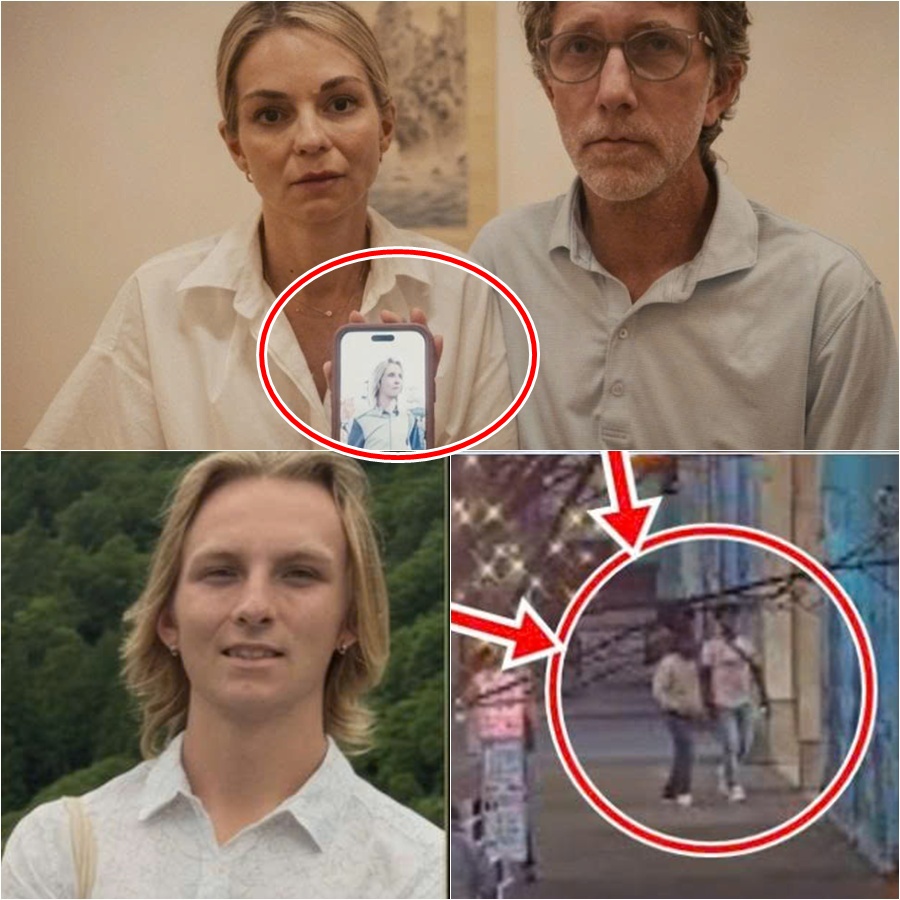
When the body of James “Weston” Higginbotham—an Auburn University junior majoring in Biosystems Engineering—was recovered by a volunteer search team in the treacherous mountain terrain of the Yamashina district outside Kyoto, the internet immediately latched onto a highly controversial narrative. It was widely believed that the young man had fled into the deep woods following a sudden, heated argument with his mother regarding her reliance on ChatGPT.
However, the investigation by the Kyoto Prefectural Police has just taken a dramatic and chilling turn. Tracking digital footprints and physical evidence left behind, authorities have uncovered a devastating “double-bombshell”: a physical, handwritten final letter and a series of deeply philosophical, heavily burdened text messages sent just days before Weston vanished.
This new evidence does not merely shatter the superficial assumptions of online armchair sleuths; it opens a painful window into the inner world of a brilliant but isolated young man. What began as a standard missing person search in the wake of a natural disaster has officially shifted into a profound, forensic psychological autopsy.
Part II: The Haunted Regret of One Left Behind
“I wish I had asked him what he meant…”
That devastating confession of deep personal regret came from a close, unnamed friend of Weston back in the United States. According to sources close to the investigation, the friend proactively stepped forward after news of Weston’s death was confirmed. They turned over the entire private chat history between themselves and Weston from the days leading up to the Higginbotham family’s vacation to Japan.
According to investigative records, Weston’s messages showed no signs of impulsive anger. Instead, they were painted with heavy, existential, and philosophical undertones, bearing an immense emotional weight. The 20-year-old student repeatedly questioned human existence, the future of humanity, and the collapse of ecological values in the face of invasive modern technology.
Excerpt from the friend’s statement:
“At the time, I just thought Weston was going through a phase of deep contemplation, which was entirely consistent with his personality. He was an incredibly brilliant, introverted guy who constantly worried about the environment. I failed to realize the gravity of the situation. I didn’t know it was a final cry for help, coded beneath philosophical musings.”
The friend’s agonizing realization has struck a chord with millions across social media, sparking a massive conversation surrounding “masking”—a psychological coping mechanism where high-achieving youth project a facade of perfection to conceal an internal collapse.
Part III: Breaking Beyond the “ChatGPT Media Trap”
To understand why this letter and the newly uncovered text messages completely upend the case, one must look back to May 29, 2026—the day Weston vanished.
Prior to this week, major media outlets ranging from Fox News to the New York Post, alongside thousands of online forums, heavily capitalized on a sensational story: a modern, technology-driven generational divide. At a historic temple in Kyoto, Weston reportedly had a sharp dispute with his mother, Nancy Higginbotham. The argument centered on her use of ChatGPT to organize and schedule their entire family vacation itinerary.
As a strict vegan and a fierce environmental activist on his college campus, Weston reportedly experienced a profound anxiety attack during the dispute. He was profoundly distressed by the massive carbon footprint, immense water consumption, and energy drains required to power next-generation AI supercomputers. In a state of intense emotional distress, Weston disabled his Life360 tracking app, left his personal belongings behind, and walked alone into the dense forests of Yamashina—just as a powerful tropical storm was making landfall in central Japan.
The digital community initially blamed the mother, the AI technology, and the alleged impulsiveness of Gen Z. But the newly uncovered evidence proves a devastating truth: ChatGPT was not the cause.
The existence of the final letter indicates that Weston had been preparing for his departure long before the argument ever took place. The dispute at the temple was merely the final trigger—or perhaps, an excuse Weston seized upon to distance himself from his family and embark on a tragic path of no return. The young man had carried a massive, solitary psychological burden all the way from his hometown in Alabama to the ancient capital of Japan.
Part IV: A Digital Firestorm on True-Crime Forums
The official confirmation of a physical final letter has caused an absolute explosion of activity across online platforms like Reddit (specifically r/TrueCrime), X (formerly Twitter), and dedicated true-crime Discord servers.
Digital investigators are currently dissecting three major facets of the case:
1. Pre-meditation vs. Spontaneous Outburst
Writing a physical, pen-and-paper letter requires deliberate intent, time, and clarity of thought. One highly upvoted post on Reddit argued:
“You don’t just happen to have a final letter ready in your pocket because you got mad at your mom over a phone app. Weston planned this. He was standing on the edge long before he ever set foot in Japan.”
2. The Debate Surrounding the Letter’s Discovery
Currently, the Kyoto Prefectural Police and the U.S. State Department have tightened their circle of information, refusing to disclose exactly where the letter was found. Was it left behind in the family’s lodging in Kyoto? Or was it recovered later from a waterproof compartment in his backpack found near his body on the mountain?
This information vacuum has led true-crime vloggers to spin numerous theories. Many suspect that the document is not just a standard farewell note to his family, but an extensive “environmental manifesto,” detailing his profound despair over a technology-driven future stripping away the natural world.
3. The Agony of the “Unseen Sign”
The phrase “I wish I had asked him what he meant” has gone viral on X. It serves as a tragic, cautionary refrain for parents and friends of introverted students. Netizens are realizing how easily urgent warning signs can be misinterpreted as mere intellectual or philosophical musings.
Part V: Mourning in the Heart of Hoover, Alabama
While international legislative bodies and media outlets dissect the forensic details, a heavy shroud of grief and sorrow has enveloped Weston’s hometown of Hoover, Alabama.
To his neighbors, teachers, and childhood friends, Weston Higginbotham was the very definition of kindness. He was remembered as a warm-hearted young man who fiercely protected the vulnerable and held an absolute love for animals and the natural world. No one could have guessed that behind his gentle smile and prestigious academic achievements at Auburn University, Weston was fighting a massive, solitary battle against a devastating psychological monster.
On the campus of Auburn University, student groups who had initially planned a candlelight vigil to honor Weston’s environmental legacy have expanded the scope of the event. The gathering will now serve as a major campaign to heavily emphasize student mental health resources and suicide prevention awareness.
An Auburn student union representative shared through tears:
“We honor Weston’s ideals and his love for the environment, but we also want to tell every struggling student out there: You do not have to fight alone. Do not let the darkness carry you away the way the storm carried Weston.”
Part VI: The Path Forward and the Psychological Autopsy
Currently, the logistical and diplomatic processes are underway to repatriate Weston Higginbotham’s body back to the United States. The Higginbotham family, utterly shattered and exhausted, has requested absolute privacy and declined all media interviews.
On the Japanese side, medical examiners in Kyoto are expected to release official autopsy findings in the coming weeks to establish the exact physical cause of death—whether the young student succumbed to trauma from a fall, hypothermia from the tropical storm, or a deliberate act of self-harm.
However, for the global audience watching from afar, the physical answers may pale in comparison to the emotional ones. The investigation has officially shifted from a standard recovery operation to a deep-dive “psychological autopsy”—a meticulous process of reconstructing the fragments of Weston’s final mental state through his journals, letters, digital search history, and his final, cryptic words.
The tragic passing of Weston Higginbotham will be analyzed for a long time to come. It will endure not as a sensationalized headline about a digital-age argument, but as a painful, permanent reminder of the critical importance of truly listening to the fleeting words of those we love, before it is too late.