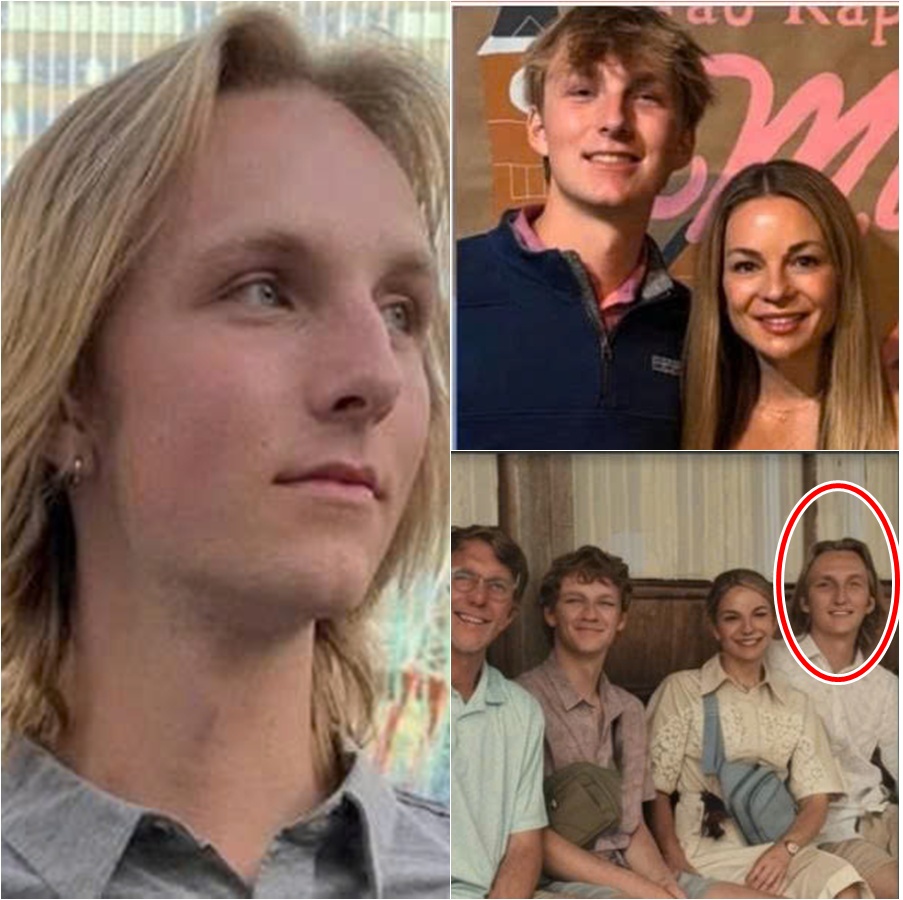
“Can people really hide what they are feeling?” – This deeply melancholic, philosophical question was texted by James “Weston” Higginbotham to a close friend less than 24 hours before he stepped into the Kyoto wilderness and never returned.
When the body of the 20-year-old Auburn University junior was discovered in the remote Yamashina mountains on Saturday, June 6, 2026, the digital world immediately exploded with theories. Initially, media attention focused heavily on a modern-day conflict: a heated family argument over the use of ChatGPT. However, a stunning new bombshell dropped by investigators has completely flipped the initial narrative. It turns out that behind the intense aversion to technology lay a profound, silent mental health crisis that the young man had desperately tried to conceal until his final moments.
A Pivot from a Cryptic Text Message
For the past week, the timeline of Weston Higginbotham’s final hours was dictated by a single narrative: the impulsiveness of a radical young environmentalist. According to early statements from his family, Weston—a biosystems engineering major at Auburn and a staunch environmental activist—had engaged in a fierce argument with his mother at a historic Kyoto temple. The reason? His mother had heavily relied on ChatGPT to plan their entire family vacation. To Weston, operating AI platforms consumed massive amounts of energy and posed an existential threat to the planet.
Following the peak of the argument, an infuriated Weston walked away, disabled his Life360 location-tracking app, and headed straight into the isolated hiking trails of the Yamashina district just as a tropical storm was beginning to lash the region.
However, a shocking development provided by Weston’s closest friend to international investigators has completely altered the nature of the case. The text message questioning the ability to “hide feelings” was sent the night before the temple argument even occurred.
“He wasn’t talking about tech, or the trip, or his family at that moment,” a source familiar with the Kyoto investigation revealed. “He was asking if it was possible for a person to completely mask the inner turmoil of their soul from the world. Looking back, it was clearly a cry for help that everyone missed.”
This revelation instantly shifted the focus of the investigation. Rather than a spontaneous act of anger triggered by bad weather or a tech dispute, authorities are now hyper-focused on the hypothesis of a premeditated disappearance—a psychological tragedy that had been festering long before he ever set foot in Japan.
The Tragedy of “Smiling Depression” and the Pressure of Perfection
On major forums like Reddit (r/TrueCrime, r/MissingPersons) and X (formerly Twitter), thousands of discussion threads have emerged to dissect Weston’s psychological state. The concept of “Smiling Depression” or high-functioning emotional distress has taken center stage.
+-----------------------------------------------------------------------+
|              PSYCHOLOGICAL "MASK" MODEL OF WESTON HIGGINBOTHAM        |
+-----------------------------------------------------------------------+
| [External Pressures]                                                  |
|  - Vacation celebrating his brother's graduation (Forced to look happy)|
|  - The archetype of a brilliant, active student at Auburn University  |
|                                                                       |
| [Internal Fracturing]                                                 |
|  - A deep sense of isolation, concealing severe mental distress       |
|                                                                       |
| [The Catalyst]                                                        |
|  - An AI-driven interaction (ChatGPT) replacing human connection       |
|  => The mask slips => Decision to leave the world behind              |
+-----------------------------------------------------------------------+
Weston did not travel to Japan as a solo backpacker; he was accompanied by his family to celebrate his younger brother’s high school graduation. For an eldest son and a high-achieving student who carried immense expectations, the pressure to appear happy, energetic, and supportive during a family celebratory trip was monumental.
A prominent criminal psychologist on X noted: “Weston’s question proves that the AI fight wasn’t the root cause; it was merely the catalyst. He was already carrying a massive burden in his heart. The argument at the temple was simply the moment the mask slipped, giving him a plausible excuse to walk away.”
When a person is standing on the precipice of internal collapse, being forced to maintain a flawless facade before those they love most is its own form of torture. Weston attempted to seek an answer from a friend back home—a final, desperate reach toward reality—before ultimately surrendering under the crushing weight of his “emotional camouflage.”
Re-evaluating the Tech Backlash: When Algorithms Replace Human Connection
The shift in the investigation has also forced the tech community and the media to re-evaluate the true nature of the ChatGPT argument between Weston and his mother. Rather than a purely political or environmental stance from a radical youth, Weston’s aversion to AI is now being decoded through a much deeper psychological lens.
For a young man silently enduring profound loneliness and an identity crisis, an overseas family trip should have been an opportunity to seek genuine human connection, understanding, and comfort from his parents. Instead, Weston was confronted with a grim reality: even the most intimate and sacred family experiences were being outsourced to and programmed by a sterile, artificial algorithm.
His mother’s over-reliance on ChatGPT to dictate where they would go, what they would eat, and what they would see in Kyoto inadvertently erected an invisible wall. To Weston, this technology was not only destroying the environment through the massive carbon footprints of data centers, but it was also “draining” the humanity and authenticity out of his core relationships. His loneliness multiplied exponentially as he watched those around him more excited to interact with a machine than to notice the fracturing in their own son’s eyes.
A Wave of Skepticism Directed at the Kyoto Police
Alongside the psychological debates, a separate wave of anger has been directed straight at the operational procedures of the Japanese authorities. On r/MissingPersons, numerous users have raised sharp questions: Did the Kyoto Police know about Weston’s fragile emotional state early in the week, and did that knowledge influence their decision to call off the search?
According to the timeline of events, after Weston went missing, a massive search operation involving over 100 police officers and rescue personnel was deployed. However, after just 72 hours, local authorities abruptly announced they were halting the search. The public reason cited was extreme weather: heavy rains from the tropical storm had triggered dangerous mudslides, landslides, and zero visibility along the isolated Yamashina hiking trails.
| Timeline (2026) | Developments in the Search for Weston Higginbotham |
| Early Week | Weston vanishes after the temple argument. Police deploy 100 personnel. |
| After 72 Hours | Kyoto Police halt the search, citing landslides and a tropical storm. |
| Friday | Internet rumors claim police classified Weston as a “voluntary runaway.” |
| Saturday (June 6) | A private volunteer team discovers Weston’s body in Yamashina. |
Online theorists speculate that Kyoto authorities may have acquired these psychological clues early on and hastily classified Weston as a “voluntary runaway” rather than a missing person in active danger. Critics argue that this labeling resulted in a premature reduction of official rescue resources, leaving the young man to face natural elements alone. It was only when a private volunteer team took matters into their own hands, defying the weather, that Weston’s body was finally recovered on June 6. To date, the Kyoto Police have declined to comment on these allegations of negligence.
Grief at Home and a Wake-Up Call for Academic “Stars”
While internet sleuths remain busy with theories, a heavy shroud of grief and sorrow has enveloped Weston’s hometown of Hoover, Alabama. Those who knew Weston do not remember him as a victim in a mysterious internet true-crime saga, but as a flesh-and-blood young man: exceptionally kind, brilliant, and deeply empathetic.
At Auburn University, his classmates in the biosystems engineering program have already begun organizing a massive campus-wide candlelit vigil. To them, Weston’s passing is not just an academic loss, but a harsh, painful wake-up call regarding the hidden mental health struggles of high-achieving students.
“Weston was always the one helping others, the one speaking up for the planet,” a classmate shared through tears. “We all thought he was so strong. No one knew what he was battling inside. It’s terrifying to think that the person who smiled the most was the one hurting the worst.”
Auburn University officials and local leaders in Alabama have issued statements expressing their deepest condolences, affirming they will fully support the Higginbotham family in the agonizing process of repatriating his body, while declining to comment on the ongoing forensic investigation in Japan.
The Future of the Investigation and a Lasting Message
Currently, Kyoto medical examiners are performing an official autopsy to determine the exact cause and timing of Weston’s death. His personal phone (if salvageable), laptop, and entire cloud data history are being extracted by cybersecurity experts. They hope that digital journals or search histories will illuminate what truly transpired in Weston’s mind leading up to the fateful trip.
The Higginbotham family, currently enduring the agonizing pain of losing a child while navigating the complex bureaucratic nightmare of bringing his body home, has issued a desperate plea. They have begged the public and the media for privacy, grace, and an immediate end to the wild, insensitive rumors circulating on social media.
Yet, as major long-form outlets like Fox News and the New York Post continuously track every minor update in the case, Weston’s final question continues to echo and haunt the digital sphere: “Can people really hide what they are feeling?”
That question stands as a somber legacy, a stern reminder to modern society. In a world saturated with perfectly curated vacation photos on Instagram, glossy itineraries designed by artificial intelligence, and fierce debates in virtual spaces, human beings seem to be drifting further apart. The most brutal battles and the deepest wounds of a human being, after all, still frequently take place in absolute silence. And sometimes, the most flawless mask is the very one we least think to suspect.