Part 1: The Fateful Warm-Up and the Cruel 240-Millisecond Window
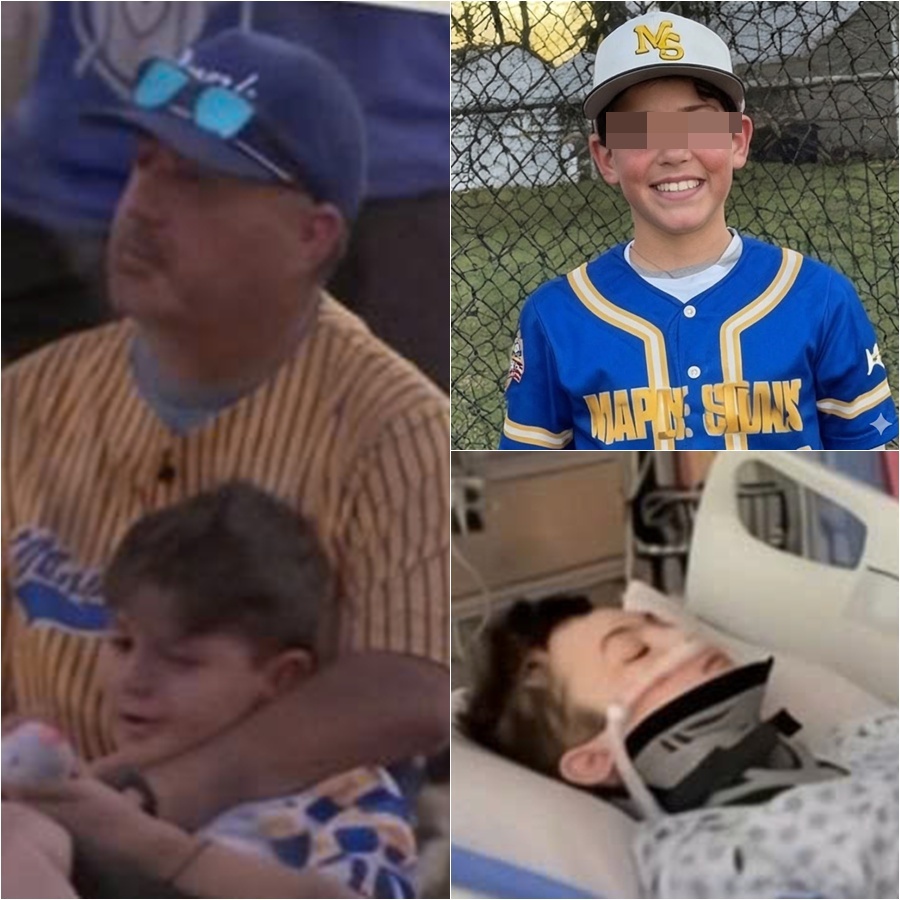
It was supposed to be just another ordinary Tuesday afternoon in the tight-knit town of Maple Shade, New Jersey. The late May sun cast long shadows across the pristine green grass of Fellowship Columbia Bank Field. The laughter of children, the crisp crack of wooden bats, and the cheerful chatter of parents created the vibrant atmosphere typical of youth baseball season. Xavier Taylor, the 12-year-old star athlete of the Maple Shade Youth Baseball Association (MSYBA), was casually walking back toward the dugout after finishing a routine pre-game warm-up.
But then, in a fleeting microsecond so swift that no one had time to react, a rogue, errant baseball ripped through the air and struck Xavier squarely in the neck.
The boy collapsed instantly to the ground like a young sapling severed at the base. The once-buzzing field fell into a terrifying, dead silence. That chilling quiet marked the beginning of the ultimate, agonizing nightmare—one that no parent on Earth should ever have to survive.
According to subsequent medical reports, the direct impact of the baseball triggered an exceptionally rare and highly lethal medical anomaly: Commotio Cordis. This severe cardiac disruption occurs when a sudden, blunt mechanical force strikes the chest or neck within a hyper-specific, microscopic window—roughly 15 to 40 milliseconds—during the heart’s cardiac cycle (specifically the T-wave phase of repolarization). When a blunt blow lands precisely in this vulnerable millisecond, the heart’s electrical system is instantly destabilized, triggering ventricular fibrillation and causing immediate cardiac arrest.
For Xavier, the rogue baseball struck at that exact, catastrophic millisecond.
Witnessing his son drop, Greg Taylor—Xavier’s father, a retired local firefighter and seasoned emergency medical technician (EMT)—rushed onto the field, driven by a father’s instinct and a first responder’s training. Amidst the frantic screams and mounting chaos, Greg heroically performed desperate cardiopulmonary resuscitation (CPR) on his own son. Sweat mixed with tears as he pumped the chest of his pale 12-year-old boy. The father’s swift, courageous actions, combined with the advanced equipment of the arriving medical helicopter, successfully restored a pulse. Xavier was airlifted to the Pediatric Intensive Care Unit (PICU) at Cooper University Hospital in Camden, New Jersey, with his heart beating once more, igniting a fragile flicker of hope for his family and community.
Part 2: The Agonizing Battle in the PICU and the Brutal Medical Verdict
However, winning the initial pulse back from the clutches of death was only the first step in a long, grueling medical battle. For weeks, Xavier’s body was kept alive by the most advanced mechanical life support systems the PICU could offer. Outside the hospital walls, the entire town of Maple Shade and thousands of sports fans across the nation rallied, holding candlelit vigils through the night, desperately praying for a medical miracle.
Yet, modern medicine is sometimes powerless against the brutal finality of physical trauma. While Greg’s immediate lifesaving efforts had successfully restarted Xavier’s heart, the prolonged oxygen deprivation sustained during the initial cardiac arrest had already inflicted severe, irreversible damage on his brain. After weeks of exhaustive monitoring, neurological assessments, EEGs, and MRI scans, the leading neurologists at Cooper University Hospital arrived at a devastating conclusion: the neurological damage was absolute.
Xavier Taylor was officially confirmed brain dead.
The catastrophic news was a crushing blow, shattering the final remnants of hope held by the Taylor family and sending shockwaves through the youth sports world. Close family representatives and local athletic officials painfully verified the update to the media. The mechanical equipment in the PICU continued to emit its hollow, rhythmic beeps, and the ventilator rhythmically expanded Xavier’s chest, but the vibrant soul, the brilliant smile, and the boundless future of a young baseball star were gone forever.
Xavier’s passing was more than just a private family tragedy; it was a harsh, grounding reminder of the fragile line between life and death, even within the seemingly safest environments of youth sports.
Part 3: The Heartbreaking Keepsakes of a Bright Life Cut Short
When a life ends at just 12 years old, what remains are often the innocent, unfulfilled dreams left behind in everyday objects. The tragedy of Xavier’s passing deepened into profound sorrow when details of his daily life emerged.
During the agonizing week when hope was fading, close family friends went to retrieve Xavier’s school gear and baseball backpack from his locker. Unzipping the worn, faded sports bag, they discovered a small notebook tucked neatly beside a lucky leather baseball charm—a gift given to Xavier by his younger brother just before the season began.
Opening the notebook, they were brought to tears by Xavier’s neat, handwritten handwriting. It was a personal bucket list of sports goals he had penned for the summer season. Among them were simple milestones like “hit .400,” “help the team make the playoffs,” and an ambitious personal goal to “be a great team captain.”
Every line and every stroke of the pen brimmed with energy, ambition, and a pure, unadulterated love for the game. But now, that list would remain forever unchecked. The stark, bitter contrast between the innocent dreams of a child and his tragic fate on a hospital bed amplified the community’s collective heartbreak.
A mother from the neighboring town of Cherry Hill shared her grief on social media:
“Every time we pack our kids’ bags for school or practice, we take for granted that they will walk back through the front door at night. This beautiful boy packed his bag with nothing but hope and ambition, and he never got the chance to carry it home. It is the ultimate, paralyzing nightmare of every parent.”
Adding to the overwhelming sorrow was a poignant detail shared from the PICU. On the night Xavier was admitted, his younger brother brought a pair of brand-new sneakers to the hospital, placing them directly beside the ICU bed. The innocent child told his heartbroken parents: “I’m leaving these here so that when Xavier wakes up, he can put them on and walk out of the hospital with us.”
Those sneakers sat there for weeks, clean and waiting. But his older brother would never slip his feet into them again. That walk home had been transformed into a final journey into eternity.
Part 4: A Community Paralyzed and an Unprecedented Wave of Solidarity
The confirmation of Xavier’s passing triggered an immediate wave of profound mourning, paralyzing regional youth sports operations. In the wake of the devastating update, the Maple Shade Youth Baseball Association took the extraordinary step of canceling the remainder of the Major League season.
For his teammates and peers—who just days prior were practicing alongside him and sharing water bottles—accepting that their talented friend would never return was an overwhelming psychological trauma. Fellowship Columbia Bank Field, once echoing with joyful cheers, became a somber sanctuary covered in floral tributes, neatly arranged baseball bats, and photographs of Xavier’s smiling face.
A league official, choked with emotion, shared anonymously:
“Our hearts are utterly shattered. We spent weeks keeping the field lights on every night, holding vigils, and placing bats on our porches to send Xavier strength. To accept the reality that he isn’t walking out of that hospital is a brutal truth that these young children are simply not equipped to process.”
Yet, it was in the darkest hours of this tragedy that the brightest light of human solidarity shone through. The boundaries between rival athletic clubs, towns, and even states completely dissolved. Grassroots crowdfunding campaigns and local Meal Trains skyrocketed, amassing well over $150,000 to assist the Taylor family with insurmountable medical bills and impending memorial arrangements.
In neighboring Pennsylvania, the Fox-Rok Athletic Association in Northeast Philadelphia transformed their scheduled tournaments into massive benefit events. Young players from various rival teams wore armbands, stepped onto the field, and raised funds under a single, unified banner: #XavierStrong.
A Fox-Rok tournament organizer expressed:
“This is a tragedy that cuts straight through the heart of the entire baseball community. When a child who loves the game this much loses his life to it, there are no separate teams anymore. We are all wearing Xavier’s jersey today.”
Part 5: The Blue Light Guiding a Fallen Angel Home
During these days of mourning, anyone traveling across the iconic Ben Franklin Bridge connecting Pennsylvania and New Jersey would witness a deeply moving sight. The entire LED system of the massive suspension bridge was illuminated in a uniform, luminous blue hue—Xavier’s signature team color.
The tribute extended far beyond the bridge. Main Street in Maple Shade stood completely bathed in blue light at night. Streetlamps, porch lights of residential homes, and storefronts were all fitted with blue bulbs. It was a hauntingly beautiful, silent testament to a town that refused to let the 12-year-old boy cross over into the afterlife in the dark.
Inside Xavier’s baseball cap, his parents found a handwritten scripture he had inscribed: Philippians 4:13—“I can do all things through Christ who strengthens me.” Those defiant words became the sole spiritual anchor for Greg and Mrs. Taylor as they navigated the agonizing medical steps of transitioning from life support to final arrangements.
Xavier Taylor did not walk out of Cooper University Hospital in the sneakers his little brother had lovingly prepared. The medical equipment has fallen silent, and the PICU room has returned to its quiet state. However, the legacy left behind by this 12-year-old boy is not measured in statistics, box scores, or home runs. It lives on in the profound outpouring of love, the critical awareness raised regarding youth sports safety, and above all, the unprecedented unity of thousands of strangers who held hands through the dark.
At the makeshift memorial at Fellowship Field, a neighbor stood quietly under the glow of the blue lights, looking out over the empty diamond and whispered:
“He may not be physically walking out of that building, but the love, the faith, and the absolute unity this boy brought to thousands of people means he is walking straight into history. We will keep the light on for him, forever.”