Summary: A weekend thrill-seeking adventure turned into the ultimate nightmare for a young family in Brazil. Maria Eduarda Rodrigues de Freitas, a 21-year-old university student, lost her life instantly after bungee jumping from a height of 130 feet (approximately 40 meters) without being connected to the safety system. The incident, witnessed in sheer horror by her fiancé and dozens of bystanders, has sparked intense public fury over the organizational unit’s inhumane negligence.
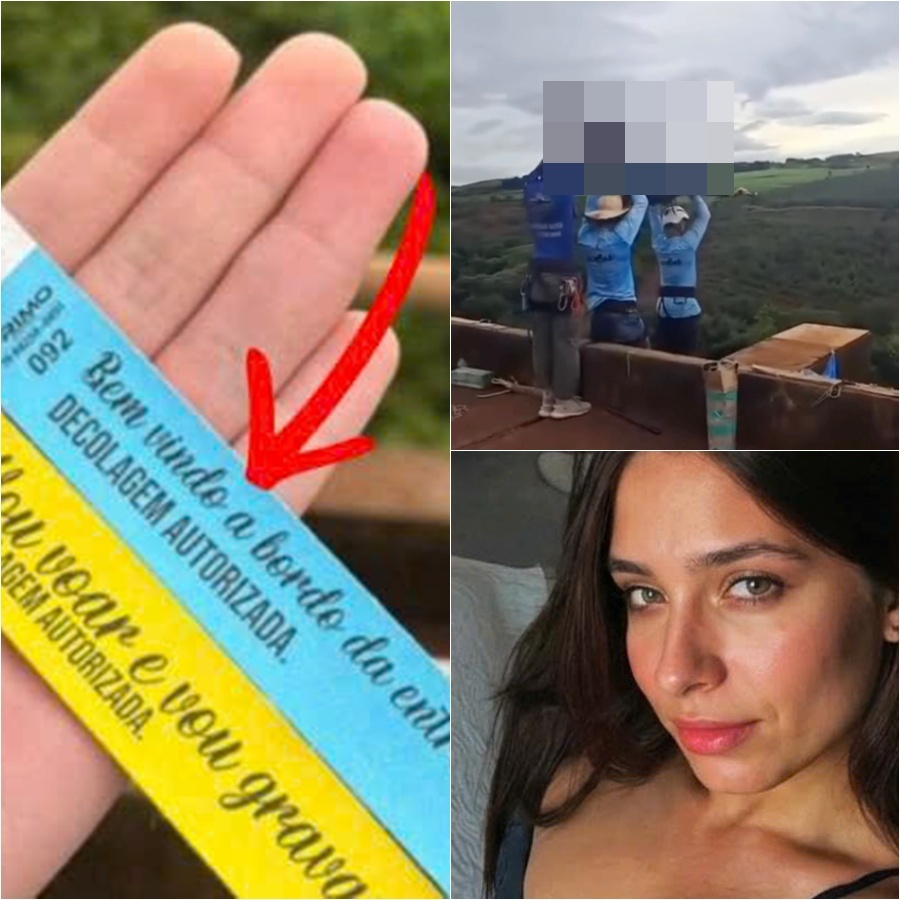
A Fateful Weekend and the Heartbreaking “Prophecy” on Social Media
Last Saturday, the town of Limeira in the state of São Paulo, Brazil, suddenly became the focus of international media following a horrific accident at an abandoned structure known locally as the “Skeleton Bridge.” The victim was Maria Eduarda Rodrigues de Freitas, a vibrant 21-year-old Physical Education and Sports Management student.
Maria Eduarda was an active individual who always yearned to push herself to new limits. This trip to the “Skeleton Bridge” was planned alongside her fiancé as a well-deserved reward to unwind after stressful hours in university lecture halls.
Before stepping onto the fateful jump platform, filled with a mix of excitement and adrenaline, Maria Eduarda took a photo of the landscape and posted it to her Instagram Story. She wrote a short, lighthearted caption:
“Who was the crazy person who let me jump off a bridge?”
At the time, her friends and followers only viewed it as a playful joke before a high-adrenaline experience. Yet, less than an hour later, that short status turned into a bitter destiny—a heartbreaking “prophecy” that left her loved ones in agonizing pain. From an innocent joke, Maria’s question has now become a damning indictment aimed directly at those responsible for protecting her life.
The Moment of Horror: “Guys, the Rope!”
The incident took place at the “Skeleton Bridge”—an unfinished structure abandoned for years that has become a hotspot for spontaneous or semi-professional adventure sports groups.
According to shocking footage circulating widely across social media platforms, the scene prior to the jump appeared completely normal. Maria Eduarda stood at the edge of the bridge, surrounded by at least three staff members from the tour operator. Dressed in technical gear, they were continuously adjusting equipment on the young woman’s body. To anyone watching the camera, it seemed that strict safety harness attachments and technical checks were being rigorously executed.
The safety staff then escorted Maria closer to the edge of the bridge, signaling that everything was ready. Placing absolute trust in the “experts” standing beside her, Maria Eduarda spread her arms and leaped into the deep void from a height of nearly 40 meters.
However, instead of the spectacular rebound typical of a traditional bungee jump, the young woman’s body plunged straight to the ground in free fall, leaving bystanders in absolute shock.
In the audio recording from the scene, the lively atmosphere was instantly shattered by blood-curdling screams. Amidst the chaos, the voice of one witness rang out in terror:
“Guys, the rope! Look at the rope!”
The witness shouted while pointing toward the jump platform on the bridge. There, the main safety line—the single most critical component tasked with saving the participant’s life—remained lying completely still on the wooden floorboards. The harness worn by Maria Eduarda had never been hooked into this core suspension system. Heartbreakingly, the 21-year-old girl jumped into the abyss without any restraining equipment attached to her.
A Futile Rescue Effort and the Grief of Those Left Behind
Immediately after the tragedy struck, screams and weeping consumed the entire area surrounding the “Skeleton Bridge.” Her fiancé, who was standing nearby to film and cheer for his bride-to-be, was forced to witness the entire sequence of his loved one falling and dying in agony. The psychological shock was so profound that he collapsed at the scene.
Local emergency services were immediately mobilized at the highest alert level. Ground rescue teams along with a Military Police helicopter were dispatched to the scene in the shortest time possible to race against time.
However, falling from a free-fall height of 130 feet onto the rugged terrain below, doctors and paramedics confirmed that Maria Eduarda died instantly due to severe polytrauma. All resuscitation efforts proved futile. The body of the ill-fated student was covered and secured to serve the subsequent forensic examination.
A Cowardly Escape in the Deep Woods and Mass Arrests
The outrage of the Brazilian public did not stop at the organizer’s negligence; it escalated to a peak over the immoral behavior of those involved immediately after the accident.
Upon realizing that Maria Eduarda had passed away and the police were en route, rather than staying to cooperate and accept responsibility, several members of the event crew immediately gathered their belongings and attempted to flee the scene to evade the law.
The Military Police of São Paulo state instantly cordoned off the entire area and launched a manhunt. Utilizing a helicopter for aerial surveillance combined with ground reconnaissance units, authorities located two suspects hiding in a dense wooded area near the abandoned bridge structure. Both were subdued and escorted to the police station in a state of panic.
To date, investigative agencies have confirmed the arrest of a total of six individuals connected to the incident. Among them:
-
Three individuals were the technical staff directly present at the jump platform who either performed (or entirely bypassed) the inspection of the victim’s safety harness.
-
The remaining three belong to the management, administration, and ownership of the adventure tourism service company.
The Civil Investigative Police are currently finalizing files to indict these individuals on charges of “Manslaughter due to gross professional negligence” (Culpable Homicide). Furthermore, lawyers representing the victim’s family are fighting to elevate the charges to “Indirect intent to kill” (Dolo Eventual)—an act where the perpetrators are aware of the danger but remain indifferent to the consequences.
The Dark Side of Unregulated Adventure Tourism in Brazil
The tragic death of Maria Eduarda Rodrigues de Freitas has exposed a painful “tumor” within the adventure tourism and extreme sports industry in Brazil: a severe lack of management, supervision, and licensing.
The “Skeleton Bridge” in Limeira is originally an abandoned public project, lacking protective barriers and unmanaged by any mainstream tourism entity. For years, it has become an “illegal bungee jumping” spot for rogue tour operators. They collect money from customers at below-market rates but drastically cut costs on equipment maintenance and completely lack safety certifications meeting the standards of the Brazilian Association of Technical Standards (ABNT).
According to extreme sports experts, an international-standard bungee jumping procedure requires a minimum of a “cross-check” system:
-
Staff Member A installs the equipment and safety harness on the participant.
-
Staff Member B independently re-verifies all locking buckles and the connection between the participant’s harness and the bungee cord.
-
The Jump Master issues the command to jump only after both staff members confirm readiness via radio or clear verbal commands.
In the case of Maria Eduarda, this entire cross-checking system was seemingly rendered entirely useless by an insane level of carelessness. The fact that a main safety line was left on the bridge deck without any of the three staff members standing right next to it noticing is proof of a suffocating lack of professionalism and a blatant disregard for human life.
A Wake-Up Call and Mourning for a Budding Flower
Currently, legislative bodies and tourism associations in Brazil are under immense pressure from the public. Thousands of citizens have taken to the streets and signed online petitions demanding that the government permanently shut down illegal extreme jump sites at abandoned structures, while imposing strict prison sentences on businesses operating “underground.”
Back at the victim’s home, an atmosphere of mourning and profound grief shrouds the small household of Maria Eduarda. On social media, friends, teachers, and those who loved the young girl continually send their deepest condolences. They remember Maria as an energetic student, an exemplary class leader, a girl who always wore a radiant smile and possessed grand ambitions for sports management.
A close friend of Maria choked back tears, sharing:
“She had such a bright future ahead of her. She studied sports to bring health and joy to everyone, but in the end, she left this world because of a sports activity run by irresponsible people. Justice must be served; there must never be another Maria Eduarda!”
The death of Maria Eduarda Rodrigues de Freitas is not merely a freak accident; it is a bloody warning sent to everyone who loves extreme thrills and those responsible for managing them. When the lifeline is left behind, the price to pay is nothing less than a human life—a price far too steep and forever irreversible.