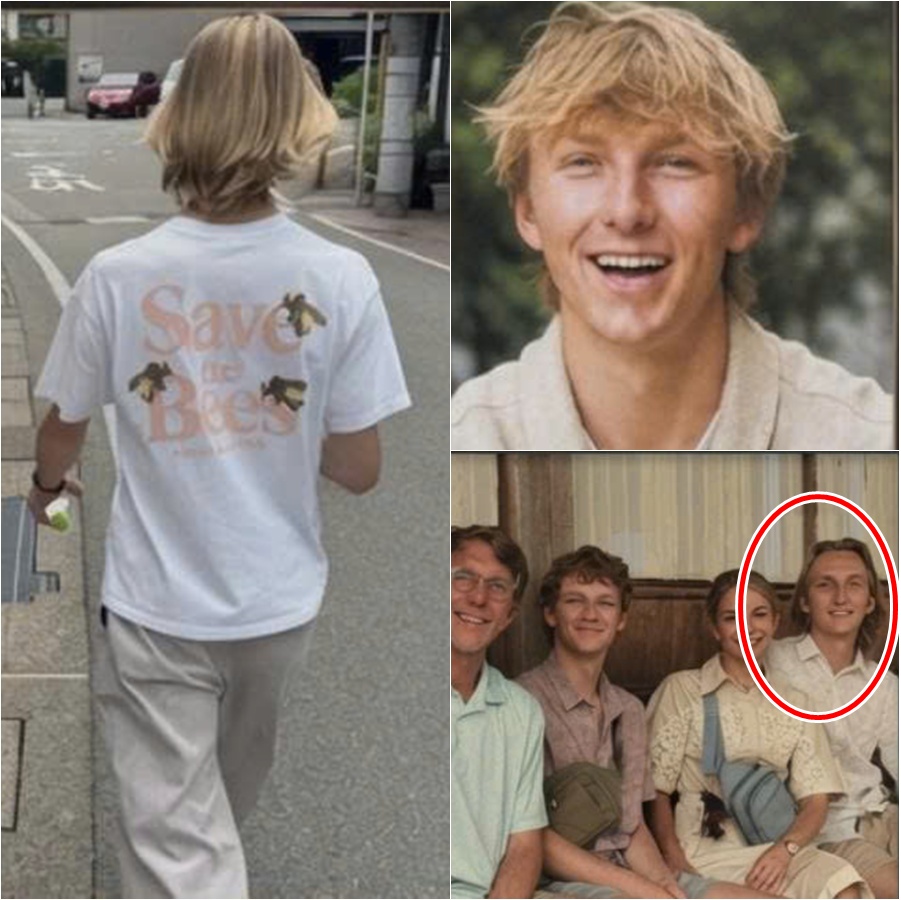
KYOTO, JAPAN – Shockwaves from the ancient capital of Kyoto have reverberated straight back to the United States. Exactly 30 minutes ago, the official autopsy report for James “Weston” Higginbotham, a 20-year-old American student, was released. However, instead of providing the definitive answers needed to close days of agonizing searches, the document has ignited a fierce, high-stakes standoff between Japanese law enforcement and the victim’s grieving family, who are openly refusing to accept the official ruling.
What began as a tragic missing person case in the midst of a tropical storm has now officially evolved into a complex, cross-border medical and psychological mystery. Buried beneath the cold, clinical language of the forensic report lies immense grief, deep skepticism, and an impending international legal battle.
1. The Fateful Report and the Shocking “Seventh Line”
The ordeal began on May 29, when Weston Higginbotham, an Auburn University (Alabama, US) junior, suddenly vanished in Kyoto’s Yamashina district just as a severe tropical storm was making landfall. After days of relentless searching through treacherous weather conditions, his body was discovered in a remote, mountainous area.
Thirty minutes ago, as portions of the post-mortem findings—which are being kept highly classified by the Kyoto Prefectural Police—leaked to the press, the peaceful narrative of a routine “hiking accident” completely shattered. According to leaked sources close to the investigation, the crux of the entire report rests on the seventh line—a single forensic conclusion that fundamentally alters the nature of the case.
While Kyoto authorities stopped short of using the explicit word “suicide,” their core finding definitively asserts that Weston’s death was the direct result of his own deliberate and extreme actions on the night he walked away from his family.
“Even if he lost his temper, he would never do that…”
Those were the frantic, tearful, yet resolute words echoing from Weston’s inner circle and family. For a mother and father already enduring the unimaginable pain of losing a child, the Japanese police’s conclusion feels like a second blade twisting into an open wound. They have flatly and publicly refused to sign off on the official findings.
2. Who Was Weston Higginbotham? The Clashing Portraits of the Victim
To understand why the Higginbotham family is pushing back so fiercely, one must examine who Weston was before he ever set foot in Japan. Back home in Hoover, Alabama, Weston was universally known as a beacon of kindness.
-
An Exemplary Life: Weston was a standout student at Auburn University. He lived a strict vegan lifestyle, was deeply passionate about environmentalism, and actively participated in animal conservation efforts.
-
A Gentle Nature: Friends, professors, and neighbors all use words like “gentle,” “non-violent,” and “someone who actively avoided conflict” to describe him.
-
A Natural Protector: On an Auburn University community Discord server, a classmate shared through tears: “Weston was a protector. He cared about the planet, he cared about animals, and he loved his family more than anything. Nothing about these leaks from the police aligns with the person we knew every single day.”
Consequently, when Japanese authorities painted a picture of a volatile young man engaging in reckless, self-destructive behavior on a desolate mountain in the dead of a stormy night, his family was left completely blindsided. They acknowledge that Weston had been stressed prior to his disappearance regarding a dispute involving ChatGPT and the setup of location-tracking apps, but they maintain that minor friction could never drive someone of Weston’s character to recklessly throw his life away.
3. The Digital Battleground: A Storm of Theories
Almost immediately after news of the family’s rejection broke, international internet forums like Reddit (specifically the r/TrueCrime community) and X (formerly Twitter) exploded with millions of discussions. The internet has split into sharply divided camps.
The Psychiatric and Environmental Camp
Many digital sleuths argue that Weston may have experienced a sudden, acute “psychological break” or entered a state of induced delirium. They hypothesize this could have been triggered by a perfect storm of factors: psychological stress from the prior disputes, the brutal elements of the storm, severe hypothermia causing profound disorientation, or a hidden, undiagnosed medical condition.
The Conspiracy and Skepticism Camp
Conversely, a massive faction on X has expressed deep distrust toward local law enforcement. They argue that chalking the death up to “deliberate, extreme behavior” by the victim is the fastest, least costly way for Kyoto police to close a sensitive international case, thereby avoiding a grueling homicide or third-party foul play investigation.
4. Subpoenaing Medical Records: The Pivot of a New Investigation
In an astonishing twist unfolding alongside the autopsy’s release, authorities have suddenly shifted their focus toward Weston’s lifelong medical history. Law enforcement has moved swiftly to secure his complete U.S. medical records, including past physicals and data from Auburn University’s student health center.
This abrupt escalation raises a massive question: What did Japanese forensic examiners find inside Weston’s body?
| Area of Inquiry | Investigative Focus | Objective of Authorities |
| Biochemical Markers | Screening for unusual toxins, stimulants, or acute hormonal imbalances. | To determine if an external chemical element influenced the victim’s behavior. |
| Sleep Disorders | Reviewing history for sleepwalking (somnambulism) or night terror syndromes. | To explain how Weston could have wandered deep into a forest in a storm unprepared. |
| Neurological Pathology | Checking for hidden seizure disorders or undetected brain lesions. | To look for an underlying root cause that could induce severe spatial disorientation. |
5. Cultural Barriers and a Deepening Gulf of Distrust
The gridlock between the Higginbotham family and Kyoto police is more than a disagreement over forensic science; it exposes a glaring, painful reality: a profound cultural clash within the justice system.
The phrase “Even if he lost his temper, he would never do that” has now become a rallying cry across social media in support of the family. Numerous international analysts point out that Japanese investigators may be fundamentally misinterpreting or rigidly “localizing” the personality traits, lifestyle habits, and environmental anxieties of a young American man.
Japan’s legal system is renowned for its strict, insular protocols, whereas an American family expects absolute transparency and the right to information. When language barriers are high and psychological nuances are translated mechanically into cold administrative reports, suspicion and defensiveness between both sides become inevitable.
6. Grief Consumes Auburn as a Protracted Legal Fight Looms
Back home in Alabama, the announcement from 30 minutes ago has thoroughly crushed any lingering hope for a straightforward, peaceful conclusion. A heavy cloud of grief and indignation has settled over the student vigils planned at Auburn University. Students and locals refuse to accept a narrative that stains the memory of their beloved friend and neighbor in foreign reports.
The tragic story of Weston Higginbotham has now officially entered a darker, far more litigious phase.
According to newly received updates, legal representatives for the Higginbotham family have already made contact with top independent forensic experts in the United States. Their goal is to demand that Japanese authorities hand over all raw forensic data, CT scans, and tissue samples so that an independent, secondary autopsy can be performed.
However, the road to truth will undoubtedly take months, if not years. Integrating U.S. medical records into a Japanese police file will face severe delays due to stringent international medical privacy laws (such as America’s HIPAA regulations) and complex, certified judicial translation processes.
Conclusion
As major networks like Fox News and prominent outlets like the New York Post prepare to broadcast the breaking details of this autopsy, the world is once again forced to witness the agonizing gap between what is written on official paperwork and what a mother’s heart knows to be true.
Caught between the classified files of the Kyoto police and the heartbroken cries echoing from Alabama, the truth of what actually happened to Weston Higginbotham on that dark, stormy night in the mountains of Yamashina remains a profound, painful, and unresolved mystery.