Introduction: An Unsettling Morning on Social Media
On a day like any other, the NASCAR fanbase was suddenly rocked by a brief yet dramatic headline that surfaced on X (formerly Twitter) and rapidly spread across Facebook and TikTok:
“Final Words of Kyle Busch Revealed Following Sudden Passing.”
To those who love the sport of high-speed racing, Kyle Busch is not just a name; he is a living legend, an icon of resilience, and one of the most polarizing figures in NASCAR history. Naturally, news of his “sudden passing” and his “final words of regret” instantly triggered a media earthquake. Within hours, the internet was flooded with thousands of shares, tens of thousands of mourning comments, and somber tribute videos set to melancholy music.
But behind the chaos lay a harsh reality:
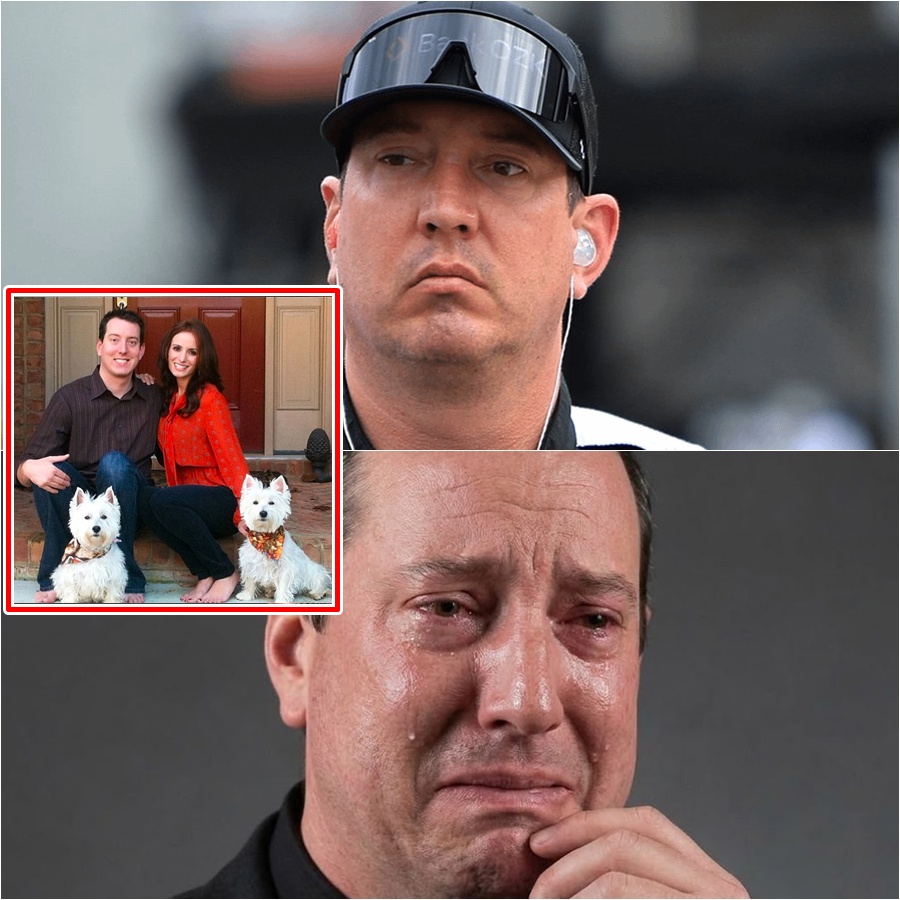
Kyle Busch was completely alive and well. The entire tear-jerking narrative was nothing more than a flawless product of clickbait tactics and the toxic plague of fake news that continues to suffocate social media platforms.
Part 1: Decoding the “Formula” of the Kyle Busch Fake News Storm
To understand how a blatant lie could deceive millions of people, we must dissect how these malicious actors orchestrated the campaign. They didn’t pick an obscure name; they chose Kyle Busch.
The Status of a “Beloved Villain”
Within the world of NASCAR, Kyle Busch occupies a highly unique space. With two Cup Series championships and hundreds of victories across various racing tiers, his talent is undeniable. However, alongside his talent, Busch is famous for his blunt, sometimes brash personality—never shying away from confrontation on the track or in the press room. He is the ultimate “love him or hate him” character, but he is someone you absolutely cannot ignore.
This polarizing star status makes him the perfect target for clickbait factories. Any news attached to the name Kyle Busch automatically generates massive engagement.
Striking the Psychological Chord: Manipulating Reader Emotion
The rumor didn’t just stop at claiming Busch had died. The creators went a step further, subtly weaving in the element of “final words” that hinted at “unresolved chapters and hidden regrets” from his racing career.
Media Psychology Insight: Humans are naturally drawn to the secrets and inner thoughts of public figures. By exploiting curiosity and empathy, this rumor triggered an “unconditional share” reflex in social media users before their logic had a chance to verify the facts.
Part 2: The Alarming State of Modern Sports Media
The Kyle Busch incident is not an isolated event. It is the peak of an alarming trend in modern sports media, where “speed” and “engagement metrics” have effectively run “the truth” off the track.
The Era of Algorithms and Engagement Traps
Today, social media platforms operate on algorithms optimized to hijack user attention. Content that is provocative, shocking, or triggers a wave of comments is automatically prioritized and pushed to the trending feed.
Media profiteers understand this perfectly. They create websites designed to mimic reputable news outlets, draft earth-shattering headlines, and deploy bot networks to flood the internet with initial shares. By the time real users see it, they are overwhelmed by a sea of information and falsely assume it must be true because “everyone is talking about it.”
The Erosion of Editorial Filters
In the race to capture every click, even B-tier mainstream outlets or prominent sports bloggers occasionally falter. Instead of picking up the phone to call Kyle Busch’s representative or his racing team for confirmation, they opt to “re-report” the story using vague qualifiers like
“According to sources on social media…” or
“Rumors are swirling that…”. This irresponsible behavior inadvertently washes and legitimizes the fake news, turning an unfounded fabrication into a seemingly credible report.
Part 3: The Severe Consequences Behind “Harmless Clicks”
People often assume that entertainment or sports rumors are just harmless gossip that hurts no one, unlike political or economic disinformation. This is a flawed and dangerous assumption.
CONSEQUENCES OF SPORTS FAKE NEWS:
├── For Individuals & Families: Mental anguish, emotional distress.
├── For Fans: Broken trust, emotional manipulation.
└── For Society: Erosion of truth, normalization of falsehoods.
Deep Emotional Anguish for the Family
Put yourself in the shoes of Kyle Busch’s family—his wife Samantha, and his children. Imagine waking up to a phone exploding with hundreds of condolence calls, and opening social media only to see your husband or father’s face framed in black-and-white alongside final farewells. It is a cruel form of psychological harassment. Furthermore, the athlete themselves faces unnecessary mental strain that can impact their competitive mindset and commercial partnerships.
The Erosion of Public Trust
When fake news becomes this pervasive and effortless, the public falls into a state of “skepticism fatigue.” They no longer know what to believe. When a society loses its filtering mechanism for trusting mainstream information, integrity and truth are cheapened.
Part 4: What Fans and the Press Must Do in an Information Blizzard
The “final words” controversy surrounding Kyle Busch is a costly wake-up call. It forces us to re-evaluate the responsibility of every link in the information supply chain.
The “3-Second Brake” Rule for Social Media Users
Before hitting the “Share” button or dropping a sad emoji on a shocking piece of news, every digital citizen should run a quick verification checklist:
- Check the Source: Is this news coming from CNN, ESPN, or Fox Sports—or is it from a bizarre domain name like “quicknews24h.xyz”?
- Cross-Reference: If a megastar like Kyle Busch actually suffered a tragedy, every major news outlet in the world would break the story within five minutes. If only a few anonymous social media accounts are discussing it, it is 99% fake.
- Guard Against Emotion: If an article deliberately uses overly tragic language to spark extreme curiosity, be on guard. It is bait, and you are about to bite.
The Responsibility of Journalists and Tech Platforms
Sports journalists must return to the core values of their profession:
Objectivity, Verification, and Accountability. The pressure of KPIs or ad revenue can never justify skipping the fact-checking process.
At the same time, tech giants like Meta, X, and Google must implement stricter measures. Algorithms need to be recalibrated to immediately flag, down-rank, or penalize accounts that habitually spread misinformation regarding human life.
Conclusion: Return the Track to Speed, Return the Media to Truth
The rumor about Kyle Busch’s “final words” eventually dissipated when the driver himself appeared, healthy and smiling beside his familiar race car, continuing to tackle corners at blistering speeds. The rumor popped like a soap bubble, leaving fans relieved but also exposing a deep scar in online behavior.
Kyle Busch will keep racing, keep performing, and likely keep dividing opinions with his talent and raw personality. His actual words will only matter when they come directly from him amidst the smoke of burning rubber in the victory lane—not through the cold, deceitful text of keyboard trolls.
The battle against fake news is much like a grueling NASCAR race: it demands absolute focus, split-second alertness, and, above all, respect for the rules of the game. It is time for sports fans to become “smart drivers” of information, mastering its speed so they never spin out at the curves of a lie.